Modular content gets described as a framework. At Bayer it’s been closer to a five-year operating change — and the hard parts weren’t technical.
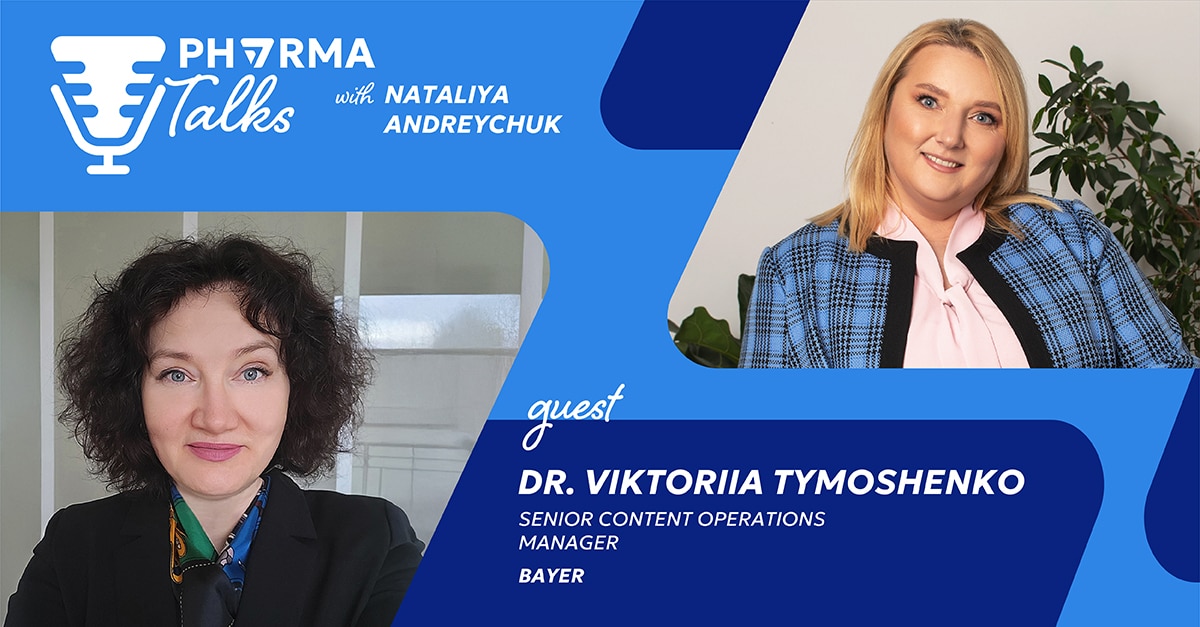
In the second episode of Pharma Talks, Viseven CEO Nataliya Andreychuk spoke with Dr. Viktoriia Tymoshenko, Senior Content Operations Manager at Bayer, about what the transformation actually required.
Starting With Local Autonomy
The first milestone was letting local content creators build interactive content without writing code. Novel at the time; standard now.
“Today, we can confidently say that we create a better customer experience with our content,” says Dr. Tymoshenko. “We are significantly faster and more cost-effective.”
With that foundation set, attention moved to visibility. Bayer built a dashboard giving real-time insight into which modular assets get deployed, how customers engage with them, and what performs across channels.
Tagging, and the Question Global Teams Keep Asking
Bayer tags content by core message across channels, which lets the team check whether messaging holds consistent and stays aligned with brand goals.
That feeds into a question every global team asks: what happens to our content once local markets take it? Pairing AI with CRM data, Bayer can now trace which global assets are reused, where, and how customers interact with them — closing a long-standing gap between global oversight and local execution.
The Part That Was About People
Leadership backing came first. Top-down support made it possible to build an internal community of experts, creators, and collaborators who carried the project through the rough patches.
“No system works perfectly from the start,” says Dr. Tymoshenko. “Maintaining close contact with content creators in different countries has been crucial for us.”
The deeper change was moving from outsourced production to internally driven work. That meant upskilling, redefining roles, and learning a different content lifecycle.
Lead Market Instead of Global-to-Local
The traditional model — headquarters produces, countries implement — is fading at Bayer. In its place: a lead-market approach where local teams create content that other countries then adopt and adapt. More flexible and collaborative, but it demands orchestration that didn’t exist before.
The friction is real. MLR processes, internal training, and shifting compliance requirements all need coordination.
“We assumed it would be straightforward,” says Dr. Tymoshenko. “But practice has shown that every channel requires a customized approach. Today, we stay truly modular predominantly within selected channels like emails and visual aids.”
That last point is worth sitting with: modularity works well in some channels and not others, and Bayer found this out by doing it.
AI as Collaborator
Generative AI is already active in the workflow — automated translation, content generation, asset design, repurposing across channels. Data privacy, compliance, and legal guidance remain open questions.
“AI makes us more ambitious with our dreams and more autonomous in content production,” Dr. Tymoshenko says. The ambition: pull approved modules from the CMS, generate text and images, translate, and adapt for multiple channels in a single pass.
What Transfers to Other Organizations
Bayer’s specifics won’t map onto every company, but the sequence and the priorities largely do. Five patterns hold up:
- Executive alignment is a precondition, not a nice-to-have
- Upskilling local creators pays back over a long horizon
- Measure continuously — the dashboard came second, but it made everything after it possible
- Build communities, not silos
- AI enables, it doesn’t drive — human creativity still sets direction
Bayer’s case suggests modular content is less a framework to install than a way of operating that an organization grows into.