HCP time is the scarcest resource in pharma marketing, which makes repetition expensive in a way most channels aren’t. According to Veeva Pulse, 65% of pharma communications remain disjointed — HCPs receiving messages that don’t connect to anything that came before.
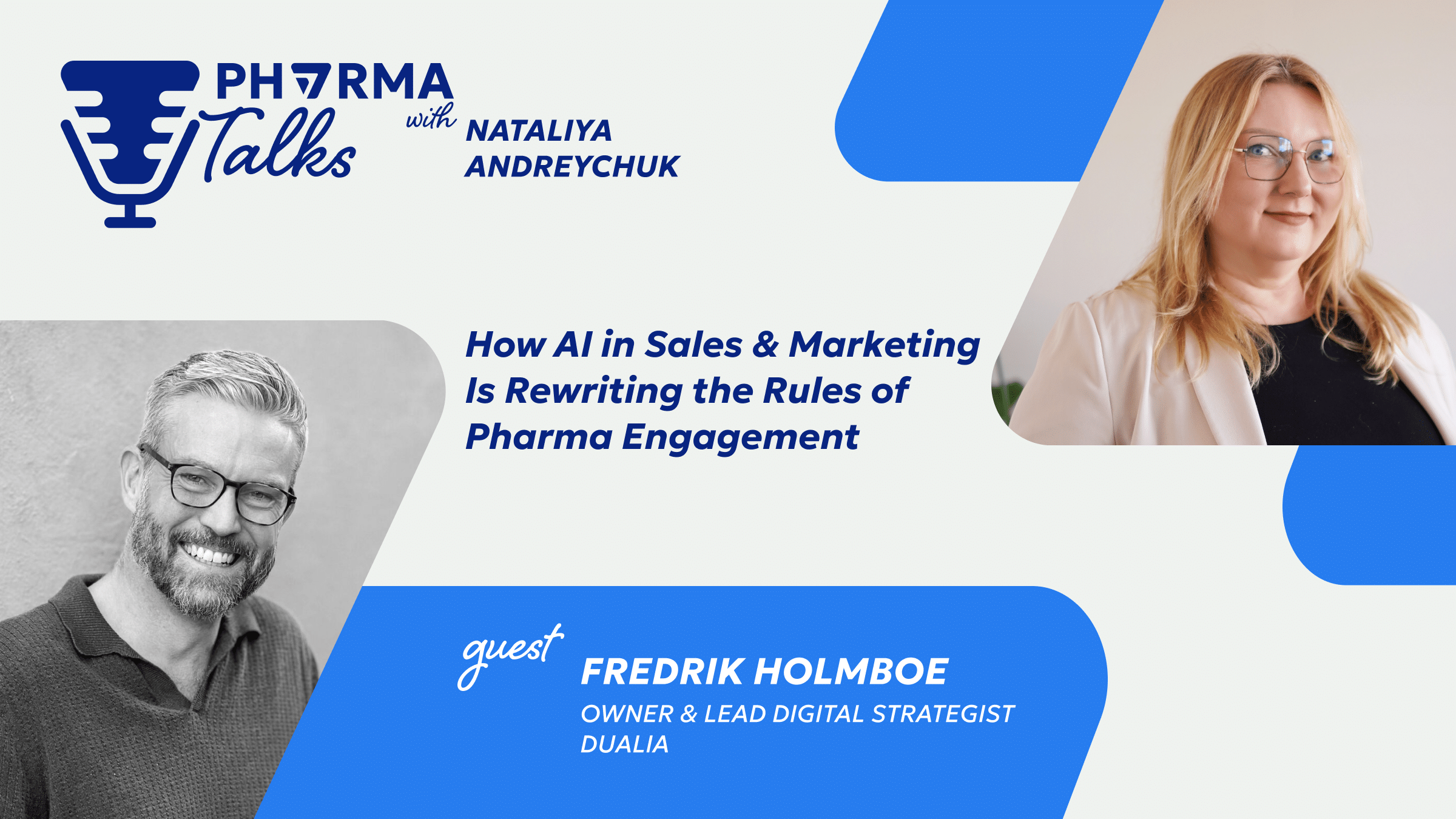
In this episode of Pharma Talks, Nataliya Andreychuk spoke with Fredrik Holmboe about closing that gap.
Fredrik’s route into the industry is unusual: a background in neuroscience, philosophy, and cognitive science, and an entry point in the late 2010s driven by an observation that pharma marketing needed to go digital without many good examples of what that looked like.
Where the Fragmentation Comes From
Marketing, sales, and medical operating in parallel produces exactly the experience the Veeva number describes. Fredrik’s team works against it with what they call the ABC + Content Excellence Framework — three workshops across four to eight months, aligning teams on messaging, persona strategy, and next steps, then translating that alignment into next best actions for field teams.
What It Looks Like in Practice
The example Fredrik walks through is a KOL called Patrick — evidence-driven, hard to meet, and unwilling to engage without a clear reason to.
Mapped across a timeline from 2024 to 2026, each interaction gets a marker: yellow for digital touches, white for attempts that failed, blue for in-person meetings.
Late last year and into this one, the timeline is mostly white. Patrick isn’t engaging, which is a readable signal about the value of what preceded it.
Two months later he agrees to a call. Ahead of it, the team analyzes prior campaigns and defines five potential follow-up messages specific to him, with approved modular content acting as the reference point that keeps the rep relevant and on message.
The interesting part is what happens afterward. Walking back to the car, the rep records a voice memo answering five questions about the meeting. AI transcribes and structures it. Because the rep had consented to being recorded as an AI avatar, the system generates a script and produces the video. By the time the rep reaches the car, it’s in the KOL’s inbox.
The mechanism matters less than the property it creates: each interaction builds on the previous one, so follow-ups arrive with context rather than starting over.
Beyond Content Generation
Fredrik’s framing puts AI across the whole cycle rather than at the production step — social listening to surface what patients and HCPs are actually discussing, prioritization of which personas to focus on, and bridging commercial and medical databases so assets align across both.
Nataliya’s constraint on all of it: the focus belongs on the persona, not the product. “It’s about having meaningful conversations, not pitching products.”
Agentic systems extend the range. With the right architecture, agents can reach commercial and medical data, suggest content, and guide an interaction end to end — integrated into existing workflows rather than requiring an ecosystem built from scratch.
Where This Goes
Fredrik’s forecast splits by role: marketers become orchestrators of AI, reps depend on AI-driven enablement, and medical teams take on safeguarding the accuracy of what the systems produce.
He’s direct about the failure mode. AI isn’t inherently a solution and can make the underlying problem worse. HCPs have limited time; a system optimized for output rather than relevance floods already-overwhelmed doctors with more of what they were already ignoring.
Avoiding that requires the silos to come down — not for organizational tidiness, but because a model working from partial data produces partially relevant output.
Avatars and What They’re For
The avatar case Fredrik describes is about continuity. A conversation happens, an avatar recaps it, and when the HCP returns, the avatar recalls what was discussed and supplies the specific information requested — pre-approved and compliant.
His view on the technology generally is that it shouldn’t cost millions to access. Democratized tooling is the condition for it being useful at scale rather than a capability a few organizations hold.
Agents are demonstrating what they can do, but the value comes from the combination with human judgment. Technology isn’t the differentiator. Creative intelligence is — how flexibly you can work, and how actively you participate in the process end to end.