Anything not built for one individual isn’t personalization. By that definition, most of what pharma calls personalized is something else — and the confusion has real consequences for where budget goes.
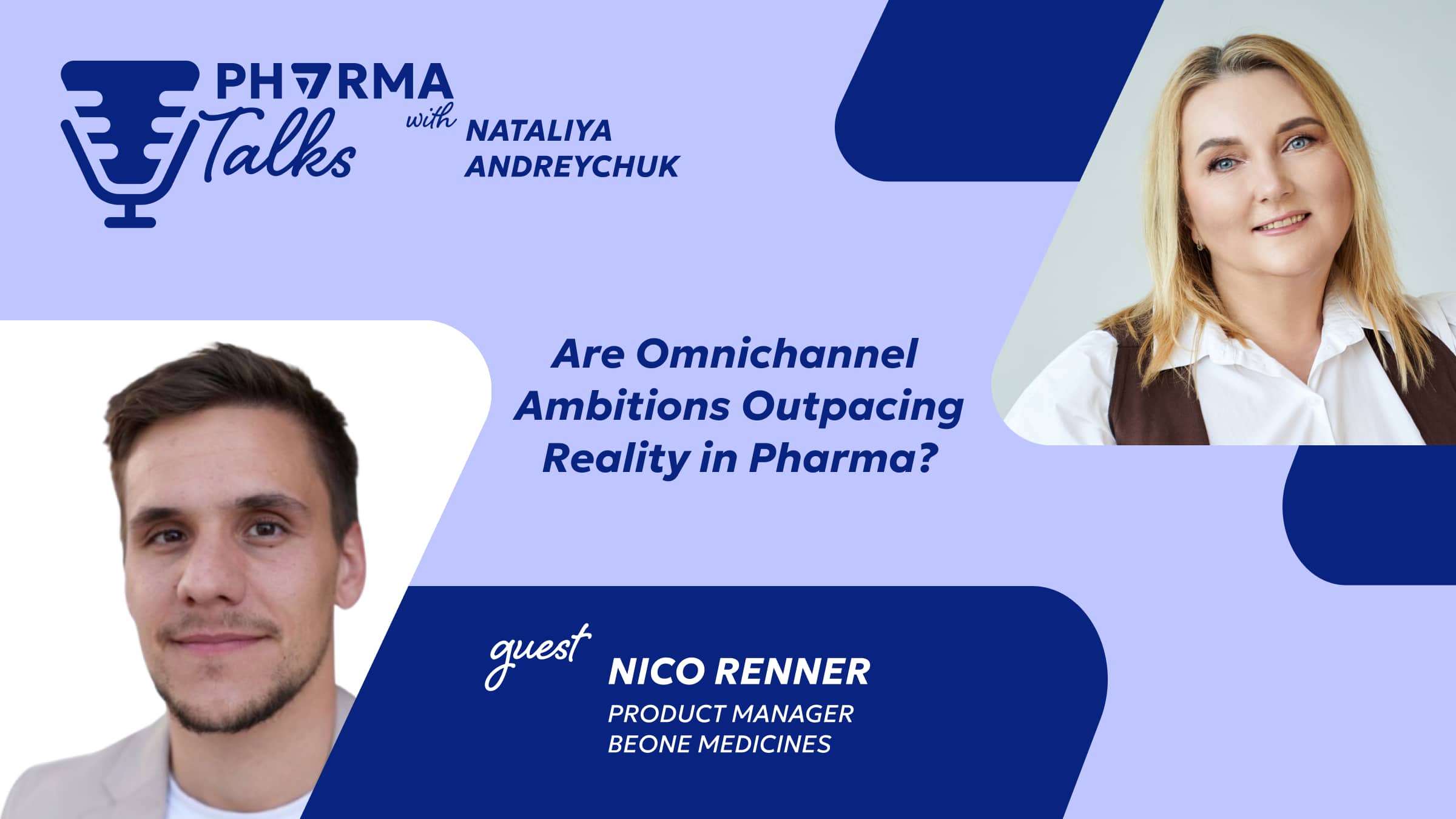
In this episode of Pharma Talks, Nataliya Andreychuk spoke with Nico Renner, product manager at BeOnes Medicines, about what’s overhyped in omnichannel and what’s underrated.
Recalibration After COVID
Nico’s frame of reference starts with COVID rather than the industry’s earlier era, which shapes what he sees as change.
We were suddenly asking: do we need face-to-face interactions anymore? Everything became digital.
That assumption turned out to be incomplete. The pendulum came back as teams rediscovered what human interaction does, and hybrid engagement models emerged from the correction rather than from a plan.
We thought digital and omnichannel would solve many problems. But they didn’t solve everything.
His metaphor for where that leaves the industry:
In pharma, we already have a nice picture of a skyscraper, but we’re still standing on a construction site, and we don’t know which tool to use first.
The gap he’s pointing at is between terminology and execution. Discussion concentrates on theory while operations lag — most visibly around personalization and customer experience.
Nataliya connected it to what’s now expected of the role: marketers as data experts, journey experts, content strategists, and MLR navigators simultaneously.
Why Pharma Isn’t Netflix
The comparison came up constantly when Nico entered the industry, and he considers it a foundational error.
Netflix and Spotify are leisure activities. They’re voluntary. Pharma is different. Reading a clinical study is not the same as watching a movie.
The ambition helped picture a destination, but it pulled the industry toward something that was never feasible.
Nataliya’s addition shifts the frame rather than defending the comparison. Viewed only through a marketing lens, the Netflix analogy over-commercializes what patients are actually doing.
Patients are responsible for their well-being. They want to understand what’s happening in their bodies, what options they have, and how their quality of life will be affected.
Healthcare experience isn’t entertainment. It’s trust, understanding, and useful conversations with clinicians.
The Definition Problem
Nataliya raised personalization directly, including the pressure agencies feel to build digital personas that drive content.
Nico’s answer is technical and unforgiving:
Anything not created for one individual is not personalization. That’s segmentation.
Personas are representative profiles, not people. They don’t describe one specific individual out of hundreds. He suspects the word itself causes the slippage — calling them profiles might prevent the conflation.
Is It Worth the Effort?
The follow-on question is about cost, including opportunity cost.
If people share the same disease and similar conditions, does it really make sense to personalize for every single person? Or can we tailor to a subgroup with far less effort and nearly the same impact?
Nataliya reframed it around where personalization actually occurs:
We often say segmentation is personalization at scale. But true personalization happens in the field.
Reps and MSLs personalize instinctively, through conversation and reading the person in front of them. That’s a different mechanism than anything a content system produces.
Nico’s closing estimate: around 70% of marketers believe they’re doing personalization when they’re doing segmentation.
Why the Distinction Costs Money
Nico acknowledged this might sound like semantics. It isn’t — it determines how resources get allocated and what marketing goals get set.
Nataliya agreed on the constraint. Resources are limited, which makes one-to-one execution at scale unrealistic regardless of AI. Building hundreds of individual emails is the wrong use of the capability; strong, relevant messaging aimed at the right audience is the right one.
Nico’s test question: if an email arrives from an insurance company, does a personalized first sentence change anything?
Nataliya’s answer traces the decay. Early on, personalization created a genuine sense that a message was meant for you. Now that people understand how the automation works, that feeling is mostly gone — which removes most of the effect.
AI Removed the Magic
Nico’s point is that AI accelerated the loss. When everyone knows personalization is trivial to produce, it no longer signals that anyone put in effort.
But he’s clear that personalization still matters — just not in automated marketing. Customer-facing roles remain critical because those people are driven by service and relevance. Real personalization is someone actively deciding what’s most useful for a specific person. A rep with ten assets who selects the three that matter for a particular HCP is doing the thing. Marketing-led ambitions for full personalization mostly aren’t operationalizable.
Nataliya’s extension: as automation spreads, human effort becomes more valuable, not less. People increasingly know whether they’re dealing with a person or an avatar, and that awareness will shape what they expect.
The more we automate, the more we’ll value real human effort.
What to Do Instead
Asked what pharma should focus on, Nico pointed at AI — used correctly.
The constraint he cites: physicians receive somewhere between 15 and 20 emails a day. Using AI to generate more content into that inbox drives engagement down, not up. His formulation is that AI should help marketers do less, better.
His priority is getting segmentation right first — more reliable, more efficient, more focused on real value. Everyone lacks time, which means marketing activity should be reduced to what genuinely helps HCPs.
Attention Isn’t Shrinking
Our attention spans aren’t getting shorter. If something is interesting, we invest the time.
What changed is volume. Content is always on and always accessible, which makes earning attention harder — the hook has to work against far more competition. Relevance is what makes it possible.
If I know what’s relevant for you, I can create a hook. If I just send a generic yearly summary, you don’t even know whether it matters to you.
Nico’s suggestion is that pharma can learn from how influencers in other industries earn attention: by being relevant rather than louder.
Nataliya took that somewhere else. If the industry becomes that kind of voice, the outcome isn’t reach — it’s improving quality of life. She framed it as responsibility rather than visibility.
Hot or Not
Nataliya’s closing round, with deliberately contradictory statements:
Personalization is the biggest myth in pharma marketing — Hot.
Segmentation is the real growth engine — Hot.
Doctors want the Netflix experience from pharma — Not.
More channels mean bigger HCP engagement — Not.
Most omnichannel initiatives are overpromised and underdelivered — Hot.
Marketing should own personalization, not sales — Hot.
Pharma should kill half of its ongoing digital products — Not.