Most pharma organizations have a change strategy. Far fewer have people who want the change to happen. That gap is where transformation programs quietly stall.
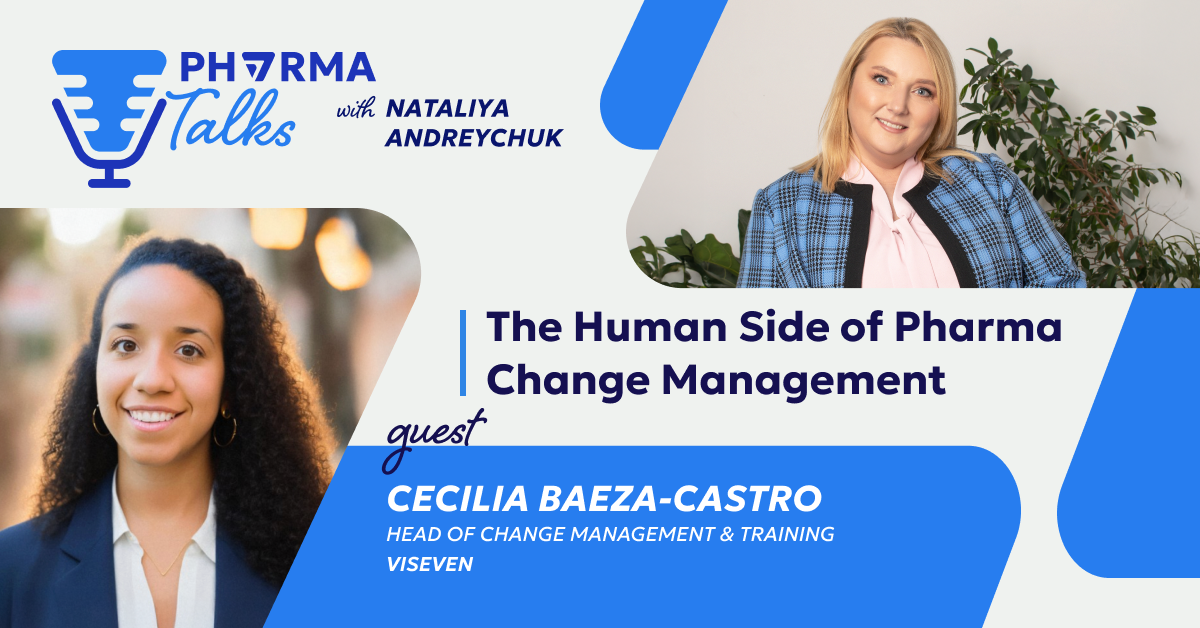
In this episode of Pharma Talks, Nataliya Andreychuk speaks with Cecilia Baeza-Castro, Head of Change Management at Viseven, about the part of the work that doesn’t show up in a project plan.
Why Resistance Persists
Start with the definition of a solid strategy. If it doesn’t prepare people to face the unknown without fear, it isn’t one — it’s a plan for the process layer only.
Resistance in life sciences is predictable. Why disturb the status quo when things appear to be working? Every change carries risk, but in a competitive market, playing safe rarely moves a brand.
Cecilia’s observation is that the real objections don’t surface in feedback forms or internal channels. Companies can recognize the value of a change and still default to old habits because those habits are comfortable — while the upside sits unclaimed.
Silos compound it. Innovations like omnichannel depend on cross-functional work; business and tech have to move together. When only one side is ready, organization-wide alignment never forms, and results don’t hold.
Then there’s regulation. Every communication carries regulatory weight, which is legitimate — but “better safe than sorry” as a default posture keeps brands from differentiating at all.
What’s In It for Them
The question leaders usually ask is how to get stakeholders on board without resentment. The more useful question is what each stakeholder actually gets out of it.
That points toward individual conversations rather than a single all-hands about corporate objectives. Ownership is what produces motivation — people need to see that their concerns registered and changed something.
With genuine buy-in, the dynamic stops being us-versus-them. Cecilia’s argument is that people who helped shape a change tend to want it to work.
Nataliya adds a practical mechanism: local teams should hold KPIs that are actually theirs. Targets a team can own are targets a team can hit.
Preparing People, Not Just Processes
Cecilia’s central point is that process readiness gets all the attention and people readiness gets none. Stakeholders need to be pushed to picture the future state — more agencies, more partners, varying levels of maturity across markets.
The goal is turning strategy into something rollable and scalable, connecting the value you’re trying to create to the vision behind it. Done that way, each phase builds on the last instead of restarting.
That’s also what produces early wins, which is the main defense against change fatigue. And where skepticism is the blocker, raw data rarely moves anyone. Real examples and use cases do.