Pharma has invested heavily in CRM, data, digital channels, and next-best-action tooling. The content supply chain feeding all of it is largely the one built before any of that existed.
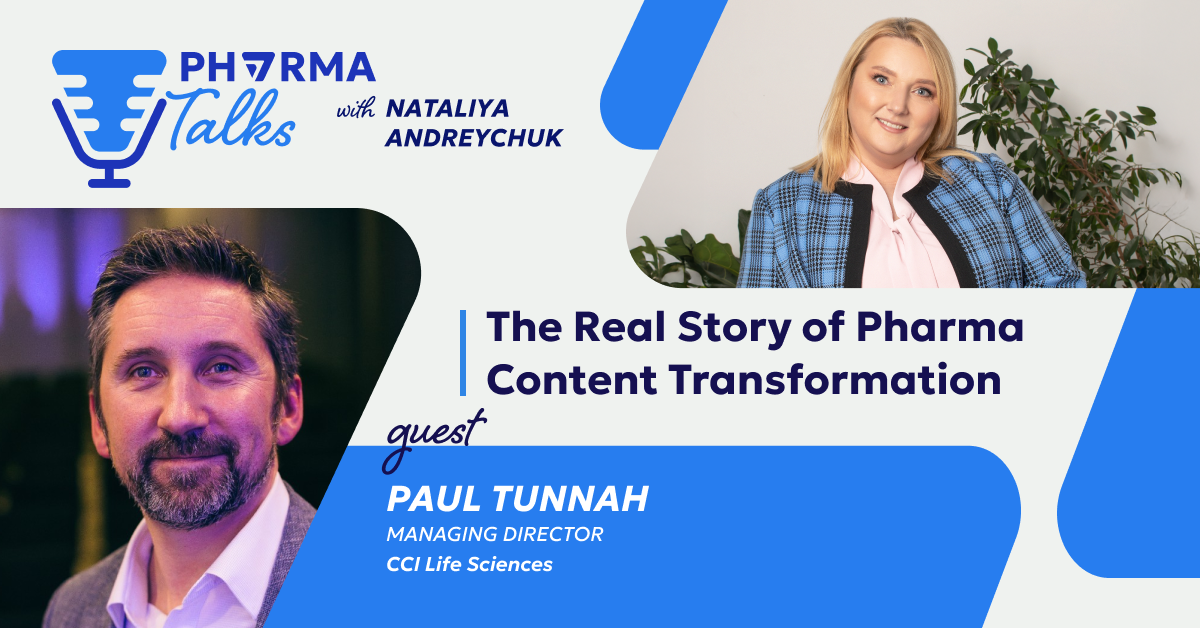
In Episode 9 of Pharma Talks, Viseven CEO Nataliya Andreychuk spoke with Paul Tunnah, whose 25 years in pharma consultancy have centered on content and communications.
Thirty Years, Same Architecture
Content supply chains were designed for a narrower world: field reps with printed detailers, meetings, a handful of emails. Content served a limited set of channels and didn’t need to travel far.
What’s changed sits entirely on the demand side. HCPs and patients expect engagement built around their specific needs. Attention spans have compressed, so stories now arrive in fragments rather than whole. More channels, deeper personalization, shorter formats — a content requirement that didn’t exist two decades ago, met by infrastructure that predates it.
What Being “In Control” Means
Paul starts with creativity. “While agencies don’t always deliver enough of it, creativity is essential. Even in a clinical environment, it’s about more than just medicines and data — you still need to excite doctors about those medicines. Creativity drives that excitement.”
The break happens at scale — turning one creative idea into every asset it needs to become. Technology helps tailor and scale, though where the line falls between human and machine is still moving.
Compliance is the other half. Content follows process, clears MLR, and holds consistent across regions so doctors aren’t getting conflicting messages. Control, in Paul’s definition, means relevance, compliance, safety, and patient focus held together while the ground keeps shifting.
Where Humans Stay Essential
“AI is best suited to manual-intensive, data-heavy tasks,” Paul says. “It feeds on existing information, but when it comes to creating something truly new, AI is less effective. That’s where agency creativity — particularly in brand positioning — remains indispensable.”
Scaling is a different matter. Emails, websites, digital assets — given solid data on segments, HCPs, and patients, AI makes production materially more efficient. Agencies stay in the process; the efficiency curve shifts underneath them.
His sharper question: why do we hold technology to a standard of perfection while tolerating manual processes we know are broken?
US and Europe, Same Pressure
US budgets are larger because the market is, which tends to mean heavier agency reliance simply because the resources exist. The efficiency pressure is universal regardless.
Nataliya’s read on the US: deliver new experiences while doing more with less. The hard part is integrating AI into processes that are already established and already approved. Tools that seem optional now may not stay that way.
Her position on sequencing — humans decide how communication starts, which topics matter, what the narrative is. AI multiplies and personalizes from there.
Conversational AI, and the Defensive Reflex
“It’s important, when talking about conversational AI, to think about the end result — what we’re trying to achieve,” Paul says. “It’s very easy to get defensive about AI, asking questions like: Will we need agents in a few years? Will marketers, reviewers, and proofreaders still have jobs?”
His redirect is outward. People work in this industry because they believe medicines matter. The goal is communicating that value — doctors understanding how to use a medicine, patients understanding how it works. A blended model follows: agencies on positioning and brand impact, AI on scale and tailoring. Jobs change rather than disappear.
MLR: 60–70%, and a Paper Map
MLR exists for real reasons — regulation, on-label accuracy, safety. But weeks or months of manual review rounds is a process problem, not a compliance requirement. The data already exists; the people haven’t stepped out of the loop.
Paul’s estimate is that AI can automate 60–70% of the work, with human oversight remaining critical. His analogy: using GPS while keeping a paper map in the glovebox. Grey areas need judgment.
Nataliya described two experimental directions her team has explored. One is algorithmic: rules-based checks validating content against legislation with change tracking. The other is simulation — a “digital worker” with MLR experience that reviews content and returns feedback.
Paul’s response opened up the more interesting benefit. Efficiency gets the attention, but consistency is the deeper problem: different reviewers read the same content differently, producing variation across regions and teams. A digital twin could reduce that subjectivity while also being faster. Nataliya added that such reviewers could be trained differently, updated as regulations change, and used to scale expertise that currently sits with individuals.
Can Pharma Innovate Alone?
Some companies have dedicated innovation teams; others rely on external partners. Paul sees consistent obstacles for the go-it-alone approach — reorganizations that disrupt projects mid-flight, and a talent market pharma can’t win. He recalled a Roche executive noting that AI specialists are being offered millions in stock.
Nataliya’s agreement came with a caveat aimed at her own side of the table: vendors have to actually keep pace, and some are shipping weaker versions of AI than they claim. Tech partners are only useful if they’re evolving as fast as the demand is.
Paul’s emphasis was on partners who can go deep on specific problems, given how complex pharma workflows are. Nataliya extended it — agencies and vendors need to collaborate with each other, not just with clients.
What’s Missing
Paul’s closing assessment: the investment in CRM, data, channels, and next-best-action has been real, and it’s working. What’s missing is the ability to produce personalized content in smaller pieces — the supply chain itself.
Combine creative agency expertise with technology that can scale and personalize, and the result is closer to an Amazon-like experience for HCPs. Nataliya’s closing point was that getting there requires agency partners to compete less and collaborate more.