Patients are asking questions online whether or not anyone qualified is there to answer them. When the qualified voices are absent, the questions still get answered — by whoever is present.
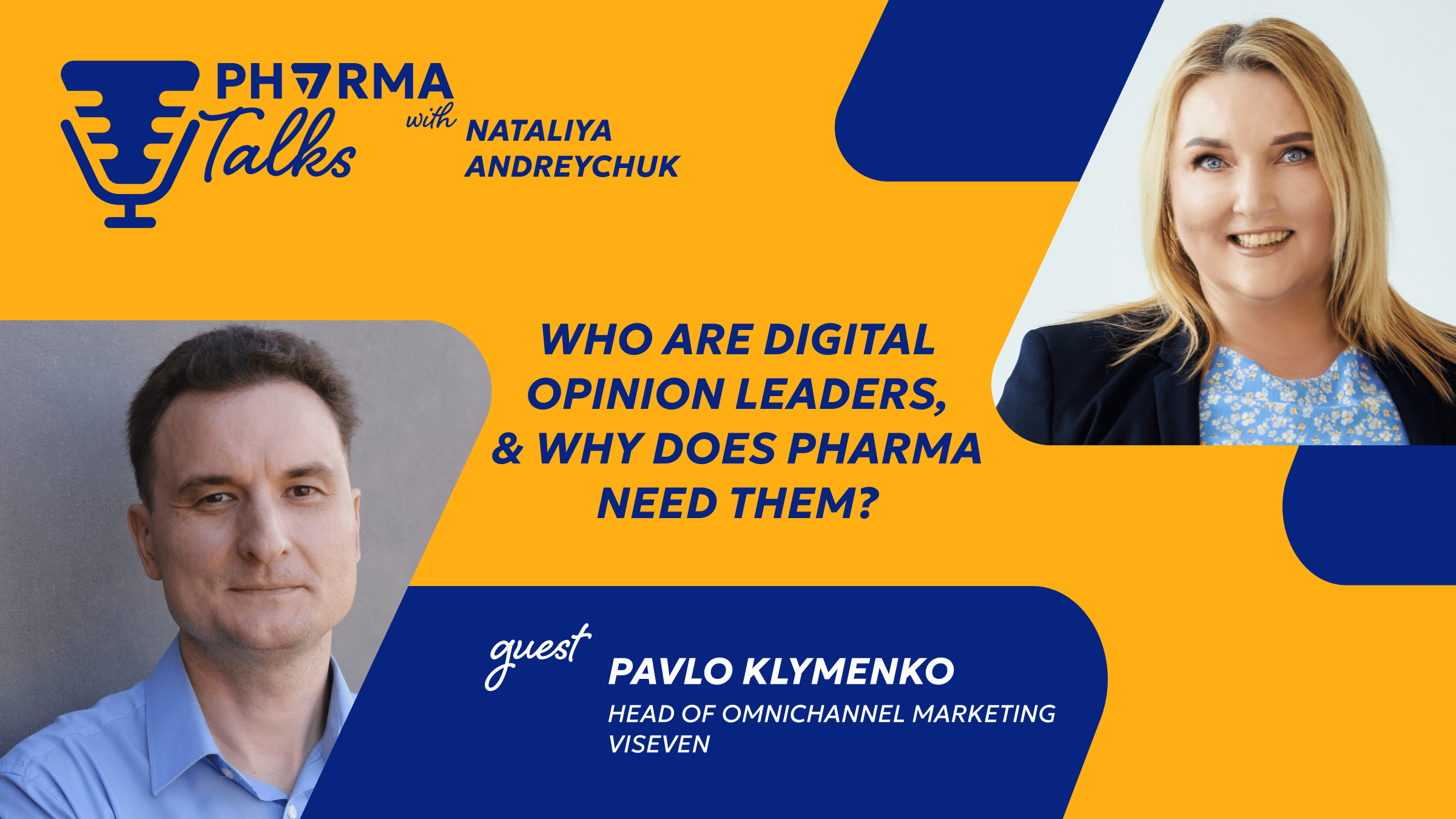
In this episode of Pharma Talks, Nataliya Andreychuk spoke with Pavlo Klymenko, head of omnichannel solutions for life sciences at Viseven, who has spent several years running DOL programs for clients.
The Shift, and KOL Fatigue
DOLs aren’t a new concept, but Pavlo’s read is that the last couple of years made the change visible. It stopped being a supplementary activity.
Healthcare thought leaders are no longer experimenting with digital. They’re emerging within it — digital is where they already are.
Nataliya raised the harder version of the question: is there fatigue around traditional KOL formats, and are we using them to fill gaps they can no longer cover?
Pavlo’s answer is yes. The old formats aren’t always natural or interactive, and engagement concentrated offline can’t reach everywhere it needs to. HCPs don’t wait for annual congresses to stay current; they expect continuous updates.
There’s an authenticity problem underneath that. Audiences feel the distance from polished, over-prepared dialogue. What lands now is openness — not titles, but expertise demonstrated through practical cases, peer to peer.
Hybrid, Not Replacement
The scaling argument is that DOL engagement reaches more channels and isn’t confined to marketing or sales topics. Once a connection exists, the conversation can extend into clinical perspectives, patient perspectives, and real-world challenges — with the caveat Nataliya added, that medical information stays governed by people with medical expertise.
Pavlo was clear this isn’t a substitution.
We design communication journeys that invite professionals to offline events if they can attend, and offer online engagement for those who cannot — or simply prefer digital.
Some speakers lead the offline component while others engage digitally. The gap gets filled rather than the format replaced.
What This Actually Solves
The audience is already there. Patients follow HCPs online and look for answers between visits, not only during them. If medically governed voices aren’t present, the space doesn’t stay empty.
If you’re not there, other influencers will occupy the space — often without proper knowledge. That leads to misinformation and misconceptions. You need to be there from the beginning.
Speed. Waiting for new guidelines or the next congress isn’t viable when practice moves faster than the publication cycle. Questions need raising with peers, openly, sometimes directly with patients.
Pavlo’s example comes from a recent analysis on obesity:
We saw a huge gap in discussions connecting obesity to depression, sleep disorders, and other comorbidities. The topic is underrepresented online. Patients are literally screaming for answers — and when they don’t get them from experts, they might accept misinformation.
The Distinction That Matters
Nataliya drew the line clearly:
We’re talking about more than influencers. Digital Opinion Leaders in healthcare and pharma operate within medical and compliance governance. Influencers promote a lifestyle or products. DOLs operate with guardrails.
Medical affairs teams calibrate messaging for compliance and accuracy. There’s control over what gets said, what kind of engagement happens, and which channels carry it. The guardrails are the point, not a constraint on it.
Why Would a DOL Work With Pharma?
The relationship only functions if it isn’t about branding or product placement. DOLs are acutely conscious of their credibility.
They are responsible for shaping narratives on social media. If pharma wants to work with them, it needs to build honest and transparent communication.
Pavlo frames it as dialogue rather than promotion. Share your thinking, studies, materials, and the challenges you’re seeing — then listen, take feedback, and help.
From his workshops with DOLs, a recurring difficulty: coexisting with influencers who have far larger audiences and much lower accuracy. In obesity discussions, patients encounter advice as simplistic as “just eat less.” Pharma can help medically sound perspectives get heard in those conversations.
The Practical Constraint
Most DOLs are willing and overloaded. The line Pavlo hears is some version of: I have a lot to say and an audience to say it to, and no time to produce content.
That’s where the support belongs. Mechanisms, content blocks, structured tasks, ongoing collaboration rather than one-off campaigns. Help clinicians communicate innovations and ideas by supplying tools and formats — and the support gets appreciated when it’s genuine.
His limit on all of it: don’t push, don’t hide promotional material inside it. Honest conversations have to stay honest.
A Different Role for the Industry
Nataliya’s framing is that this is new ground built on existing capability. Compliant medical engagement, governance tools, structured communication — all of it can be redirected toward helping clinicians express themselves rather than toward distributing brand messages.
The goal isn’t controlling the voice. It’s removing the production burden so leaders can reach their communities with what they actually want to say.
From the patient side, she called it a potential game changer: safe conversations, and advice that can actually be applied.
Where to Start
Pavlo’s roadmap, in order:
Define the therapeutic area. Focus has to precede the search for voices.
Research the regions and communities where you want presence. Find voices already active and aligned with the focus — and find someone genuinely willing to have the conversation. It can’t be forced.
Decide the format. Dialogue-based, educational, case-driven. And accept that this can’t be a one-off. It’s continuous by nature.
Sustain it. Share what you’re seeing, supply relevant information, listen to what they’re asking for. Preparing content in reusable formats is what keeps collaboration easy on their side, and keeping it easy is the work.
Build the full loop. Patients need to feel the effect — fast access to information, clear direction on what to do next.
That loop is the mechanism: DOLs receive support and insight, they produce credible content, patients get trustworthy guidance, and pharma stays present in the conversation without occupying it.
Hot or Not
Nataliya closed with rapid-fire statements. Pavlo’s verdicts:
DOLs are replacing traditional opinion leaders and advisory boards — Not.
Medical affairs are the natural owners of DOL programs — Hot.
Qualitative insights are becoming more valuable than quantitative data — Both. Quantitative shows the trends, mentions, reach, and overall landscape. Then you assess quality: is the information accurate or is it a myth? The two merge into one data-driven view.
Brand teams funding DOL programs from the start — Not.
Podcasts are becoming a core format for digital engagement in healthcare — Hot.
Influencer-style engagement is disappearing from pharma — Not.
DOLs are becoming essential for launch readiness — Double hot.